Privacy Policy
Accessibility Statement
-kopi.png)

My background for writing this book series
As a mother, some of the finest moments I’ve shared with my sons have been reading for and with them —
from the very first picture books to analyzing literature together in high school.
The strongest memories, however, are tied to their shared fascination with wild animals.
Stuffed animals like the polar bear, tiger, and penguin followed us through childhood,
and their favorite books and films were always full of wildlife — The Jungle Book, The Lion King, and many more.
I’ve been fortunate to see many of these animals in their natural habitats —
on safari in Africa and on Svalbard, where I once watched a mother polar bear with her two cubs.
Those moments left a deep impression on me.
The polar bear is my favorite animal — big, strong, majestic, independent, and indescribably beautiful.
Global warming, poaching, and loss of habitat threaten many of these magnificent wild animals.
It hurts.
This book series is my small contribution — a gentle and inspiring way to raise awareness.
It doesn’t point a moralizing finger, but instead invites curiosity, meaningful conversations, and small discoveries at home.
Reading for and together with children creates a special and intimate atmosphere —
a true gift for parents and adults.
Conversations about what we read are valuable and enriching — for both young and old.
I hope these books will give children and adults many joyful reading moments —
and awaken an understanding that we all share a responsibility to care for nature and every living creature.
Happy reading!

The Author
Gro Elfrida Flaaten

Research shows that children develop a richer vocabulary and stronger reading skills when they are read to by adults.
The frame story in each book is designed specifically to encourage shared reading and dialogue between children and parents.
In this way, the series enhances both reading enjoyment and learning — in line with recommendations from the National Reading Centre and national reading initiatives. (Norway)
The book series uses children’s curiosity to convey knowledge about nature and the environment in an engaging way.
The purpose of the series is to contribute to children’s understanding of nature and the environment through a combination of fact-based content and practical experiments.
This gives children both knowledge and hands-on experience with scientific connections in nature.
Read together...
"Why and Because"
- the book series about endangered animals and vulnerable nature
A new kind of children’s book series (ages 6–10) that combines stories, facts, experiments, and digital experiences.
Children are invited to wonder, laugh, and learn — while discovering how we can take care of animals and nature.


Endangered wild animals
Children must learn to protect the animals.
Children must learn that animals need protection.
We cannot let them grow up believing that all animals will be here forever.
It’s important that they learn about the difficult things too — but in a simple and gentle way.
They are the ones who will carry our natural heritage into the future.
Extrar:
Each book includes stories, fact boxes, a glossary, and small research projects children can try themselves.
Through QR codes, they can watch videos featuring real researchers in the field and animals in their natural habitats.

WHY do tigers have stripes?

WHY do giraffes have such long necks?

WHY are blue whales so big?

WHY do sea turtles bury their eggs?

WHY are lions dangerous?
TOPICS - CONTENT of the books:
Books with a focus on learning and experience

THE WONDERFUL WORLD OF WILD ANIMALS
To make complex topics accessible to children, a simple dialogue is used between an adult and a child who asks questions.
This pedagogical approach creates recognition and curiosity, while all the information presented is based on documented facts.The project combines factual texts with suggestions for experiments children can try at home, in collaboration with organizations such as Forskerfabrikken (The Science Factory) and Miljøagentene (Eco Agents).
The goal is to strengthen children’s knowledge of nature and climate — and to inspire curiosity and meaningful conversations within the family.
Forskerfabrikken – a Norwegian organization that promotes science education and curiosity among children.
Miljøagentene – a national network of young “eco agents” working to protect nature and the environment.
Forskerfabrikken – a Norwegian organization that promotes science education and curiosity among children.
Miljøagentene – a national network of young “eco agents” working to protect nature and the environment.

Download...

Fact boxes and glossary
– explains concepts and ensures accuracy.
We place great emphasis on making sure that everything we write is fact-based.
All content is reviewed and edited by experts.
For example, the material about polar bears is verified and approved by a specialist and researcher on polar bears.
Download

Experiments kids can do at home
We’ve got lots of fun activities waiting for you…
Experiments that everyone can do at home, using simple things you already have around the house —
like empty ice cream containers to freeze water in!
Download

The book is, of course, the key part
…but with a smartphone, tablet, or computer, the reading experience can be expanded and enriched — for example, through QR codes that give access to videos featuring researchers in the field and wild animals in their natural habitats, like polar bears on Svalbard.
Try it now – a QR code that takes you to a video:


Download

WHY are polar bears white?
The first book in the series, “Why Are Polar Bears White?”, is a fact-based children’s book framed by a storytelling element.
A curious girl finds answers to her many questions together with her mother, who shows how books and modern tools can be used to explore and discover knowledge.Facts about climate and nature can be challenging for children to grasp, so the book weaves a documentary-style story into the main narrative: a mother polar bear with two cubs begins her life in a snow den and sets out on her journey through the Arctic.
This documentary material makes the content vivid and engaging.
By combining a family story with nature documentary elements, the book invites children and adults to seek answers — together.
Download

Endangered wild animals
Unfortunately, many animal species are in danger of extinction within a short time.
We write about some of the most well-known and beloved ones.
The existence of these animals is threatened because, for example, their habitats are changing due to global warming, human interference in nature (such as deforestation of rainforests), and other man-made causes.
It is important that both children and parents learn about this, so they can become engaged and consider better future possibilities for animals and nature.
The book titles in the series are shown under each image (to the right).
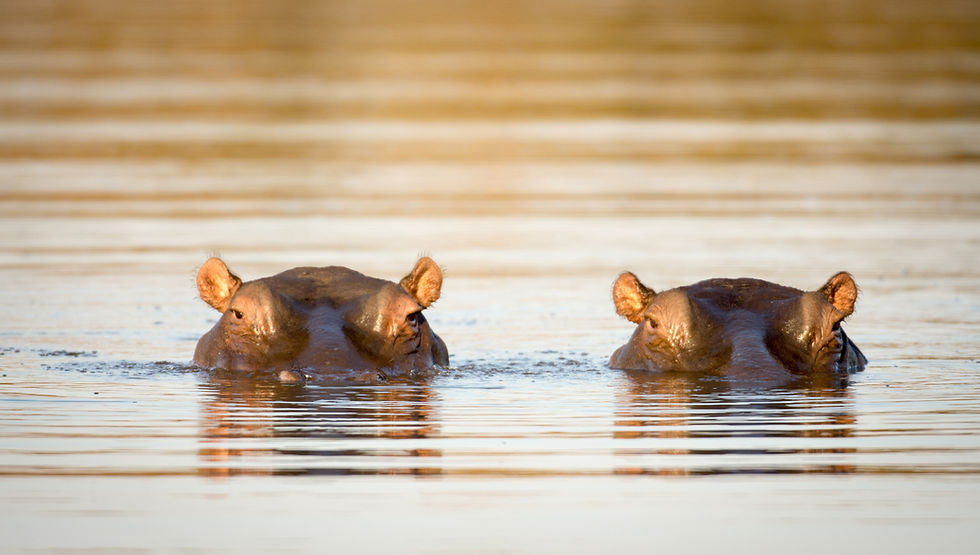
WHY are hippos so angry?

WHY are zebras never alone?
WHY do tigers have stripes?

WHY do elephants have trunks?

WHY are polar bears white?

WHY do giraffes have such long necks?

WHY are gorillas so strong?

WHY do penguins waddle when they walk?

WHY do rhinos have horns on their noses?

WHY are lions dangerous?

WHY do pandas eat only bamboo?

WHY do koalas sleep so much?

WHY are blue whales so big?

WHY do sea turtles bury their eggs?

WHY do brown bears have such short tails?
Register
- get updates first
We’ll be sharing lots of exciting content — encouraging shared reading, home experiments, animal videos, and much more to discover along the way.
You don’t want to miss it!
Please fill in all fields.
We don’t share your information, and you can unsubscribe at any time!